
Transport options for an accessible trip
Accessible travel transport usually means choosing between a taxi booking, vehicle hire or travel in a wheelchair-accessible vehicle (WAV). These options differ in who drives, how the journey is arranged and where a wheelchair user can travel. The right arrangement depends on the particular service and vehicle, not just the label used in an advert. Compare the basic options first, then check the details that apply to your trip.
Taxis
A taxi booking arranges a vehicle and driver for a particular journey. The booking sets out where and when the driver should collect you and where you need to be dropped off. Depending on the service, you may be able to arrange stops along the way or a return journey, rather than treating each leg as a separate trip.
Passenger seating depends on the vehicle and the service. You might transfer to a vehicle seat, or travel in your wheelchair in a vehicle with a suitable layout. A taxi described as accessible does not, by itself, tell you which arrangement it supports. Accessible taxis and wheelchair-friendly taxi services can differ in their boarding setup and usable passenger space.
Think of a taxi as a driver-and-vehicle arrangement for a defined trip, rather than access to a vehicle for the whole day. Before relying on a particular arrangement, establish what the exact service and vehicle can provide for your journey. A wheelchair accessible taxi may suit a one-way transfer or a day with several arranged stops, while another service may have a different layout. The vehicle assigned matters as much as the service description.
Vehicle hire
Vehicle hire gives you use of a vehicle for an agreed period, rather than a driver for one booked journey. Usually, you or another person in your party drives. The arrangement can work for a trip that includes several destinations, changing departure times or time spent away from the vehicle between journeys.
Collection and return are part of the hire arrangement: you collect the vehicle at an agreed place and return it as arranged. That differs from a taxi, where the driver brings the vehicle for a particular pickup and takes you to a drop-off. With a hired vehicle, your party controls the route and timing during the hire period, within the terms agreed for its use.
Accessible vehicle hire may involve a WAV, but the term hire does not guarantee wheelchair access or a particular layout. When hiring a wheelchair accessible vehicle, check that the available vehicle suits the intended wheelchair position and that any equipment your party needs is included and usable. Confirm how the vehicle is collected and returned, and who in your party will drive. For a longer outing with several stops, hire can offer more flexibility; a taxi may be simpler when you only need a driver for a set journey.
Wheelchair-accessible vehicles
A wheelchair-accessible vehicle (WAV) is provided with access for a wheelchair user, but the term does not specify one standard layout. A WAV may be used as a taxi, hired for a period or driven by someone in your party. The vehicle type alone does not tell you who drives or how the trip is arranged; those depend on whether you book a taxi or hire the vehicle.
Use the comparison below to separate the vehicle’s access provision from the travel arrangement. In each case, check the exact vehicle rather than assuming that all WAV taxi services or hire vehicles have the same features.
| Option | Who drives | Journey arrangement | Wheelchair position | Details to confirm |
|---|---|---|---|---|
| Taxi booking | Booked driver | Particular journey, with pickup and drop-off arranged | Vehicle seat or wheelchair position, depending on the vehicle | Whether the assigned vehicle supports the required arrangement |
| Vehicle hire | Traveller or another party member, usually | Vehicle used for an agreed hire period | Depends on the hired vehicle’s layout | Access provision and any required equipment |
| Travel in a WAV | Depends on whether it is booked, hired or privately driven | Depends on the taxi or hire arrangement | Wheelchair access is provided; the specific layout varies | Vehicle layout and how it fits the planned journey |
WAV describes wheelchair access, not whether the vehicle comes with a driver or is available for hire. Keep those decisions separate when comparing accessible travel options: choose the journey arrangement first, then establish whether the specific vehicle layout works for your party.
Match the option to the journey
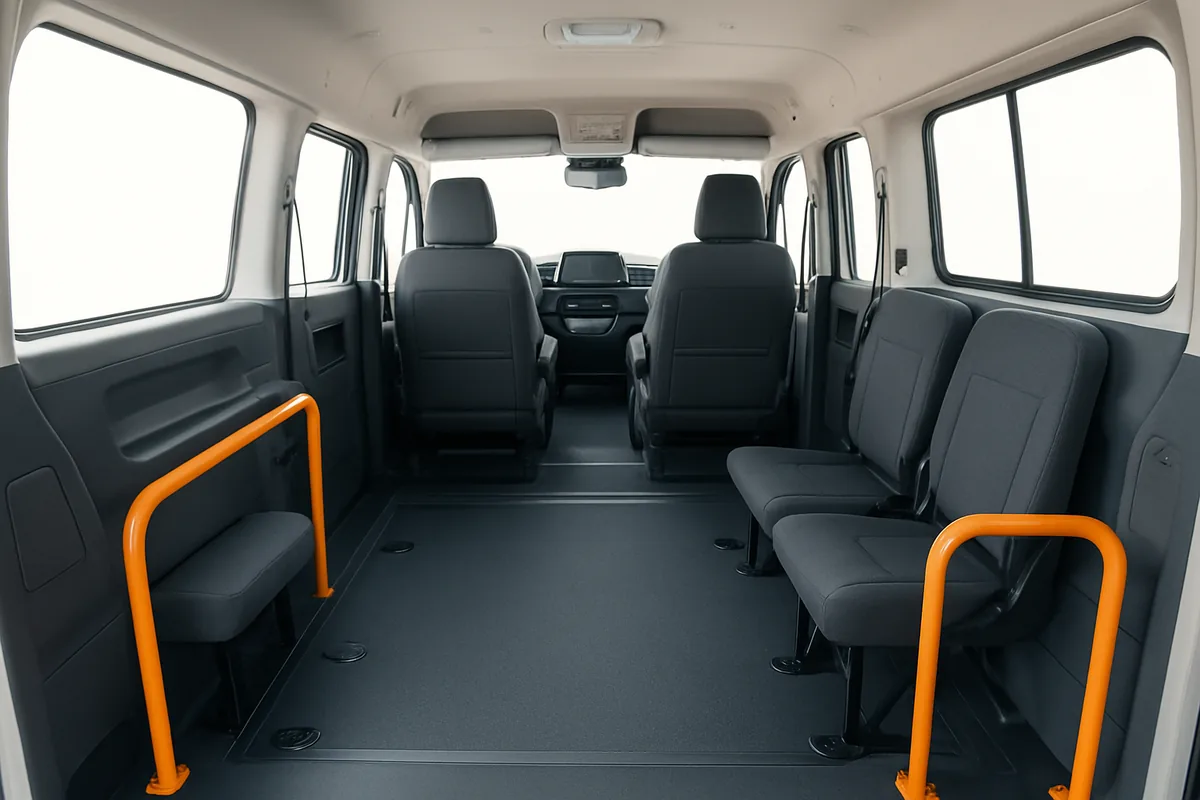
The right accessible travel transport depends on how the day is organised, who is travelling and what needs to travel with them. A single point-to-point trip can call for a different arrangement from a day with several stops or a long gap between appointments. The number of passengers, luggage and mobility equipment also affects how much space the whole party needs. Consider whether the wheelchair user plans to remain in their chair or transfer to a vehicle seat, as this changes the vehicle layout required.
Journey pattern and timing
Start by mapping the journey: note the pickup time, destinations, expected waiting periods and whether plans may change. Accessible taxis can suit direct trips, while accessible vehicle hire may offer more flexibility when the vehicle is needed throughout the day.
- For one direct journey, a taxi may be practical when the pickup time and destination are known and no vehicle is needed after drop-off.
- A return booking can work for a short, predictable visit; agree the return pickup time and location rather than assuming the driver will wait.
- For several stops, compare separate taxi bookings with vehicle hire, especially when appointments are spread across a town or several hours.
- If there is a long gap between stops, check whether keeping a hired vehicle is worthwhile or whether separate trips better match the schedule.
- When plans may change, consider how much notice is needed to adjust pickups and whether a vehicle must remain available between destinations.
A day-long itinerary with breaks between stops may favour having a vehicle available, while a single transfer may not justify that arrangement. Compare the total time booked, not only the minutes spent driving.
Passengers and mobility equipment
Count everyone travelling together, including companions who will join for only part of the trip. The number of passengers can affect whether one vehicle is practical or whether the party needs to travel in separate vehicles. List the mobility equipment and luggage for each leg: for example, a wheelchair, a walking frame, a folded manual chair, suitcases or shopping bags. A wheelchair that folds and travels separately takes up space differently from one occupied during the journey, and some equipment may need to stay with the traveller at every stop. Check the planned arrangement for the full party, not just the wheelchair user. A vehicle may have room for a passenger and chair but leave insufficient space for a companion or luggage; another layout may fit the group but require a different plan for equipment that is not carried in the passenger area. For a weekend away, estimate luggage per person and include any equipment used only at the destination. If a companion can carry a folded item separately, that may change the vehicle needed, but only if the separate arrangement suits the group’s itinerary. When comparing accessible taxis, vehicle hire or another option, use the same passenger and equipment list for each so the usable space can be judged consistently.
Travelling in a wheelchair or vehicle seat
Decide whether the wheelchair user expects to remain seated in the wheelchair during the journey or transfer to a vehicle seat and have the wheelchair stowed. These are different travel arrangements, and neither is the right choice for everyone. If travelling in the wheelchair, the vehicle needs a layout that accommodates the occupied chair in the passenger area. The wheelchair and passenger travel together in that position, so compare vehicles based on this intended arrangement rather than on whether a wheelchair can merely be carried as luggage. If transferring to a vehicle seat, the layout instead needs to allow the transfer and provide a place to store the wheelchair for the journey. Consider where the chair will go and whether it is folded or remains assembled; that affects the space available for other passengers and bags. State the intended arrangement when comparing vehicle options and planning pickup and drop-off. A taxi or hired vehicle that suits a transfer-and-stow plan may not suit a journey made while seated in a wheelchair, and the reverse can also be true. The choice depends on the traveller’s preferences, equipment and journey arrangements.
Access details to confirm
The accessibility label alone does not specify how a particular vehicle boards passengers or how much usable space it has. Arrangements can differ between vehicles offered by the same provider, and between individual journeys. Confirm the details for the exact service or vehicle, including the route on foot between each address and the vehicle. Clear, practical information helps you judge whether the full journey will work for your needs.
Boarding and usable passenger space
Ask how boarding works on the exact vehicle: it may use a ramp, a lift where fitted, or another method. A wheelchair-accessible taxi label does not guarantee a particular setup. Check the entry direction too, since a side entrance and a rear entrance can require different approaches at the pickup point.
- Ask whether the vehicle has a ramp or lift, and whether that specific device can be used at the planned pickup location.
- Request the clear doorway width and height, plus any narrow point between the entrance and the passenger area.
- Confirm the usable floor space inside, including whether the wheelchair can turn or needs to enter and position in a straight line.
- Check where the wheelchair will sit during travel, and whether that position leaves room for the passenger’s companions.
- Describe the wheelchair’s overall dimensions, including footrests, and ask the provider to check them against the actual vehicle configuration.
Useful measurements are the clear opening and the unobstructed space inside, not the vehicle’s exterior size. If a ramp is used, ask whether there is enough room at the entrance for the wheelchair to approach and align with it.
Confirm that the stated layout applies to the vehicle assigned to the journey, rather than relying on photographs or a general fleet description. These checks matter for accessible taxis and any other vehicle arranged for the trip.
Restraints, luggage and assistance
When travelling seated in a wheelchair, confirm how the wheelchair itself is secured and how the passenger is restrained. These are separate parts of the arrangement: ask what equipment is provided for each, where it is positioned, and who is responsible for fitting it before the vehicle moves. Do not assume that every vehicle with an accessibility label has the same restraint system.
Describe the wheelchair or mobility equipment you will bring, including any removable parts, and ask whether the restraint arrangement is suitable for that configuration. If you plan to transfer to a vehicle seat, confirm what changes in the seating and restraint setup; do not treat that as interchangeable with travelling in the wheelchair.
Check where suitcases, shopping, walking aids, oxygen equipment or other mobility items can be carried without blocking the entrance or occupying the wheelchair position. Ask about the number and approximate size of bags the vehicle can take, and whether any item must travel separately. A vehicle’s passenger capacity does not by itself confirm that it has room for both mobility equipment and luggage.
Clarify what assistance is included in the journey arrangement. For example, establish whether the driver can help with boarding, handling a ramp or lift, and carrying bags, and whether help is available at both ends of the trip. The provider’s answer should describe the actual service booked, rather than general assistance offered by the company.
The route to and from the vehicle
Check the whole access route between the starting point and the pickup vehicle, then between the drop-off point and the destination entrance. A vehicle may reach an address while the final approach still includes a step, a steep driveway or a long walk that affects whether the journey is workable.
Describe the surface along each route: smooth pavement, loose gravel, grass, cobbles and uneven paving can feel very different for a wheelchair user or someone walking with an aid. Note slopes, crossfalls, steps and kerbs, including whether there is a dropped kerb where the vehicle will stop. Give the approximate walking distance from the entrance to the pickup or drop-off point, rather than only providing the street address.
Access can change along a route. A level path may lead to a ramp, while a building entrance may have a step after a flat forecourt; mention each transition and any narrow gate or door. If pickup and drop-off arrangements use different entrances, check both routes separately. Share these details with the transport provider and confirm that the exact service can reach the agreed point, so the accessible journey includes the approach at both ends and not just the ride.
Wheelchair-accessible taxis and vehicle hire
For a journey with set departure and return times, an accessible taxi can provide a direct booking without requiring you to drive. Vehicle hire gives you control over the schedule and stops, but makes driving and vehicle collection part of the plan. The right choice depends on the journey, who is travelling and what equipment must come along. Before confirming either option, describe the traveller’s needs in practical terms and check that the arrangements fit the whole trip. The questions below help you compare accessible taxis with accessible vehicle hire.
Questions before a taxi booking
When booking an accessible taxi, explain the trip and the traveller’s setup rather than relying on a general request for wheelchair access. These questions can help establish whether the vehicle and arrangements will work for your party.
- What vehicle layout will arrive, and can the operator confirm that it accommodates the traveller’s wheelchair in the intended position for this journey?
- How does boarding take place, and what should the passenger expect at the pickup point, including any steps or assistance from the driver?
- Where will the wheelchair user travel, and can other members of the party sit alongside them or in the same passenger area?
- How many passengers and how much luggage can travel together, including bags, a folded wheelchair, a walker or other mobility equipment?
- What restraints are provided for the wheelchair and passenger, and can the driver explain how they are secured before setting off?
- Can the driver meet the party at the requested pickup point, and where exactly will the vehicle stop for drop-off and return?
Give the operator the equipment details, such as whether a mobility aid stays with its user or folds for the journey. For airport transfers, include flight timing and terminal pickup instructions when requesting the booking.
Planning vehicle hire
Start by deciding who will drive for every part of the trip, including any planned return journey. Check that the person who will drive meets the hire terms and is comfortable operating the vehicle’s controls; if more than one person may take the wheel, establish the arrangements for each driver before collection. This matters especially on a multi-day itinerary, where a change of driver may be needed between stops. Confirm where and when the vehicle can be collected and returned, and allow those arrangements to fit around the travel schedule. A late arrival, an early departure or a one-way journey can affect which collection and return plan is practical, so establish the locations, handover process and return instructions before finalising other travel arrangements. Describe the traveller’s usual way of travelling and check that the hired vehicle’s layout suits that arrangement. Ask for the relevant vehicle details in advance rather than assuming that every wheelchair accessible vehicle has the same configuration. If the traveller will transfer to a vehicle seat, make sure the planned seating arrangement is compatible with how they travel; if they remain in the wheelchair, confirm that the vehicle is intended for that setup. List every item that needs to travel, including the wheelchair, mobility aids, luggage and any equipment used during the trip. Establish how each item will be carried in the selected layout and whether it must be assembled, folded or kept with the traveller. For a longer journey with several stops, consider how often equipment will need to be taken out and put back, and include that handling in the day’s schedule.
Wheelchair-accessible vehicles explained
Wheelchair-accessible vehicles (WAVs) are adapted to carry a wheelchair user, but they do not all share the same layout or access features. Differences can include where the entrance is, how a wheelchair boards and where it travels inside the vehicle. The terms used to describe ramps, lifts and restraints refer to separate parts of the setup. Knowing what each feature means makes it easier to compare vehicle layouts for accessible travel transport.
Common WAV layouts
Layout affects where a wheelchair user enters, sits and travels, as well as how other passengers are seated. Common differences include the position of the access opening and the arrangement of seats around the wheelchair space.
- Rear access: The wheelchair enters through an opening at the back, often travelling forward into a designated space behind or between passenger seats.
- Side access: An opening in the side provides another route into the cabin; the wheelchair space and nearby seating depend on the vehicle’s interior arrangement.
- Ramp access: A ramp may be fitted at the rear or side entrance, with its position affecting the route from the boarding point into the cabin.
- Lift access: Some vehicles use a platform lift at an entrance; its location and the cabin layout determine where the wheelchair can travel.
- Wheelchair position: The designated space may face forward, face toward the front from a different angle, or be arranged alongside passenger seating.
- Passenger seating: Seats may be positioned ahead of, beside or opposite the wheelchair space, and some layouts provide different combinations of seats.
These features vary between vehicles, including vehicles with the same general access type. A rear-entry ramp, for example, does not by itself establish how much usable cabin space is available or how many passenger seats remain.
Access methods
A ramp creates a sloped route between the ground and the vehicle floor. Depending on the design, it may fold out from the rear or side entrance, or be placed in position separately. Boarding involves travelling along that slope and then manoeuvring into the wheelchair space inside the cabin. The approach needs enough clear ground for the ramp to rest securely and enough room at the entrance for the wheelchair to turn or align with the interior route.
A vehicle lift raises a platform between ground level and the cabin entrance. The wheelchair user boards the platform, which moves up or down to meet the vehicle floor; the platform must have room to deploy and operate at the boarding location. Unlike a ramp, a lift does not require a continuous sloped path into the cabin, but the space around its platform still matters.
For a particular vehicle, check whether access is by ramp or lift, where the entrance is, and how the boarding route continues once inside. Compare those details with the actual pickup surface and available manoeuvring area: a feature that works at one location may be difficult to use where a wall, parked vehicle or narrow approach restricts its deployment.
WAV terminology
WAV means wheelchair-accessible vehicle: a vehicle adapted to carry a person travelling in a wheelchair. The term describes its intended function, not one standard arrangement. A WAV may have rear or side access, a ramp or a lift, and different positions for wheelchair users and other passengers.
A ramp is an inclined surface used to bridge the height difference between the ground and the vehicle floor. A lift is a powered platform that raises or lowers a passenger and wheelchair to the entrance level. These terms identify different access equipment; neither specifies where the wheelchair space is inside the cabin.
A wheelchair tie-down is a system of straps or fittings that secures the wheelchair to designated points in the vehicle. An occupant restraint is a separate belt system intended to restrain the person travelling in the wheelchair. The two terms refer to different functions: one secures the wheelchair, while the other is for the occupant. The particular equipment and its arrangement vary by vehicle, so the terminology alone does not confirm which components are fitted.